
This is a guest contribution from Meredith Barranco, PhD, at the New York State Department of Health’s Office of Hepatitis Health Care and Epidemiology.
Hepatitis C and HIV are both chronic blood-borne viral infections that impact New Yorkers. As “syndemic” conditions, they tend to cluster within specific populations and interact with social and structural factors that can lead to worse health outcomes[i]. In the New York State Hepatitis C Elimination Plan, individuals living with HIV are considered a priority population. Understanding the unique characteristics of the population that is coinfected with hepatitis C and HIV is important for addressing both conditions and improving health outcomes.
Based on an analysis from the New York State Department of Health, as of the end of 2023, there were 3,668 individuals ever diagnosed with both hepatitis C and HIV living in New York State, outside of New York City.[ii] Overall, 4.4% of all individuals ever diagnosed with hepatitis C were also living with HIV at the end of 2023.
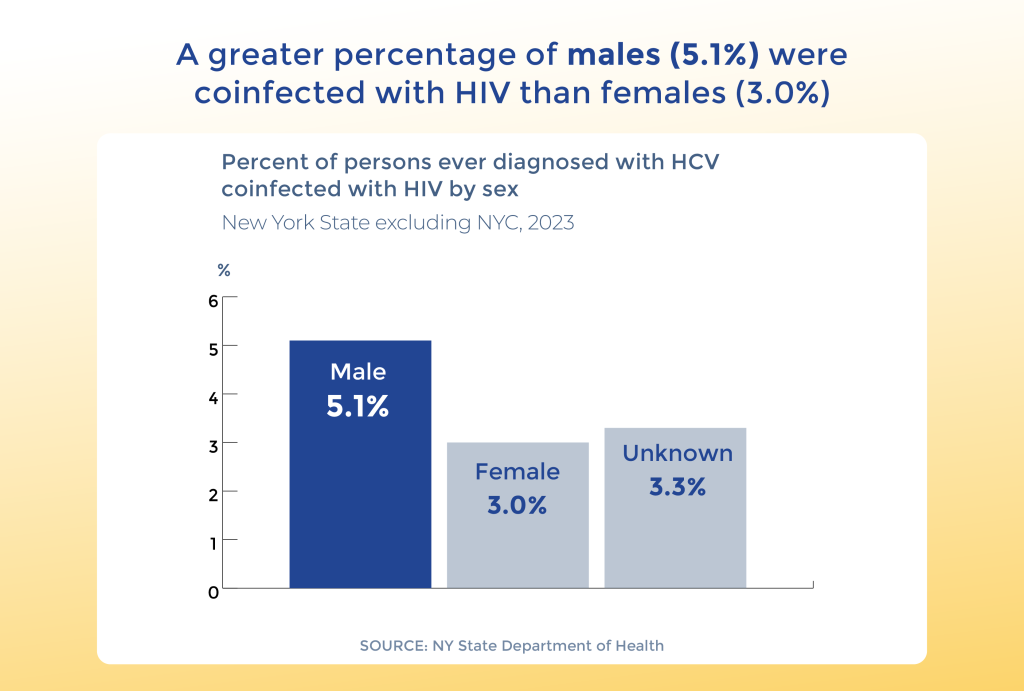
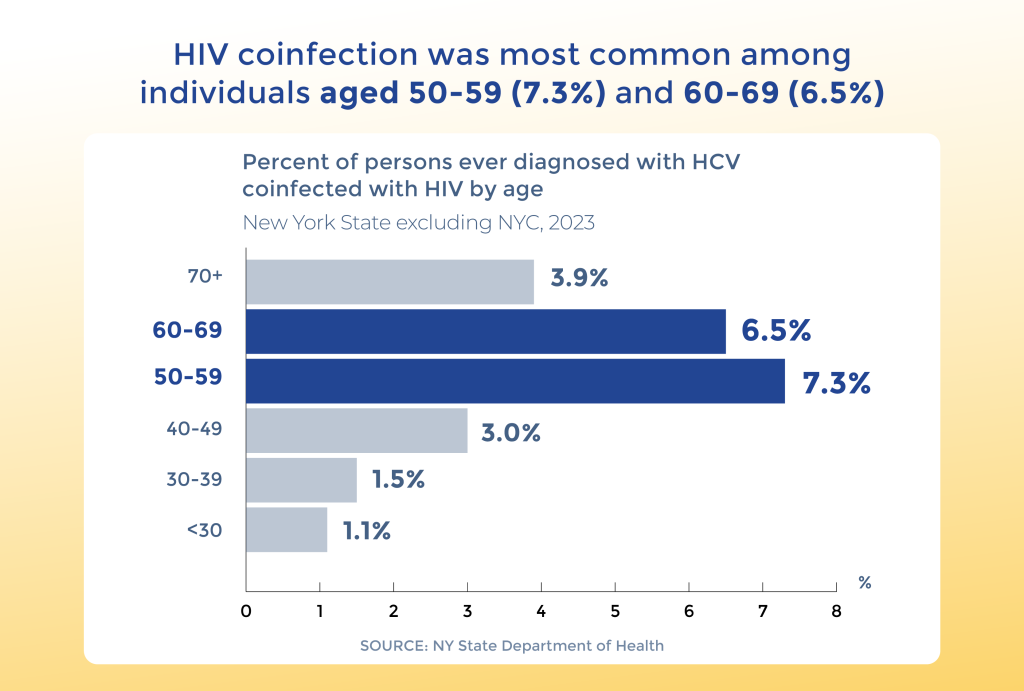
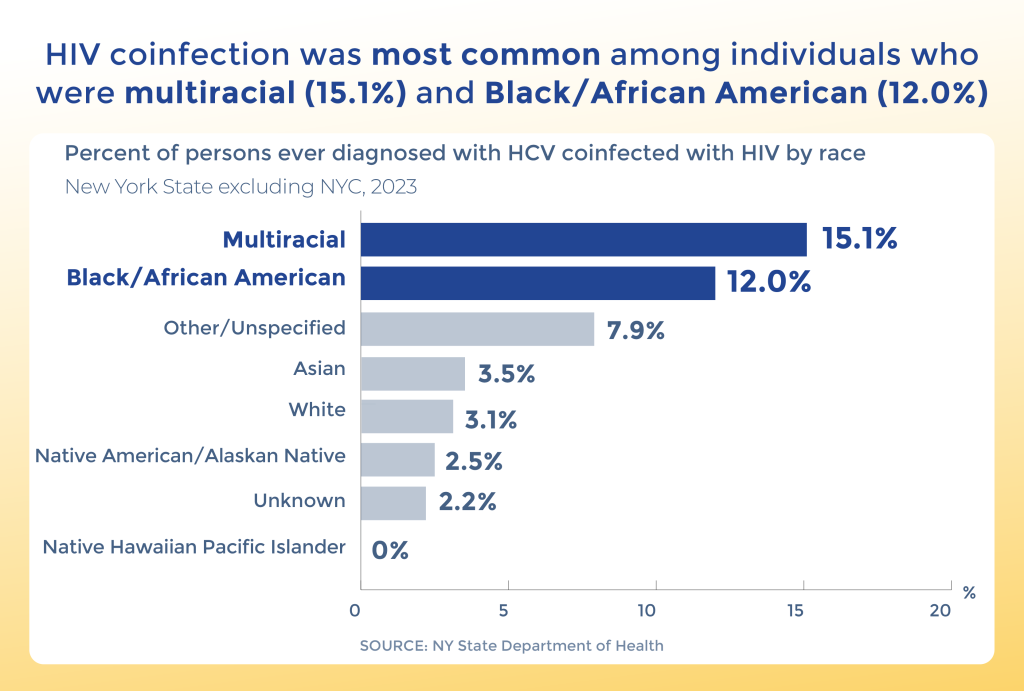
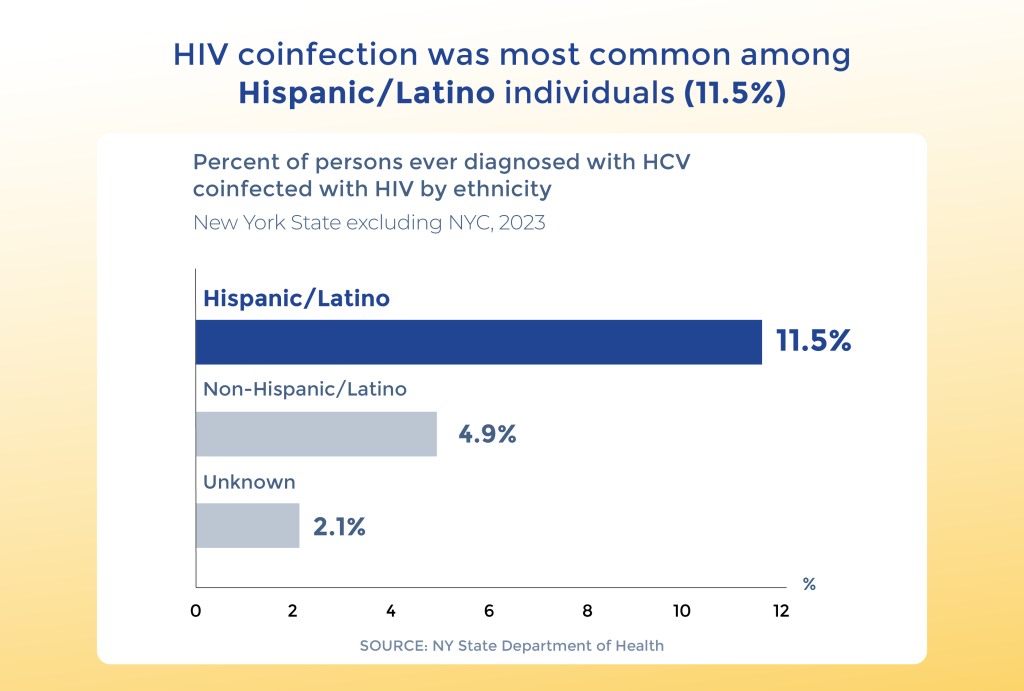
Coinfection varied by demographic characteristics. Among all individuals who were ever diagnosed with hepatitis C and living at the end of 2023:
By sex: A greater percentage of males (5.1%) were coinfected with HIV than females (3.0%).
By age: HIV coinfection was most common among individuals aged 50-59 (7.3%) or 60-69 (6.5%) as of the end of 2023. HIV coinfection was less common among individuals aged <30 (1.1%) or 30-39 (1.5%).
By race: HIV coinfection was most common among individuals who were multiracial (15.1%) and Black/African American (12.0%). Coinfection was less common among Asian (3.5%), White (3.1%), Native American/Alaskan Natives (2.5%) and Native Hawaiian/Pacific Islanders (0.0%).
By ethnicity: HIV coinfection was most common among Hispanic/Latino individuals (11.5%), and less common among individuals who were not Hispanic/Latino (4.9%).
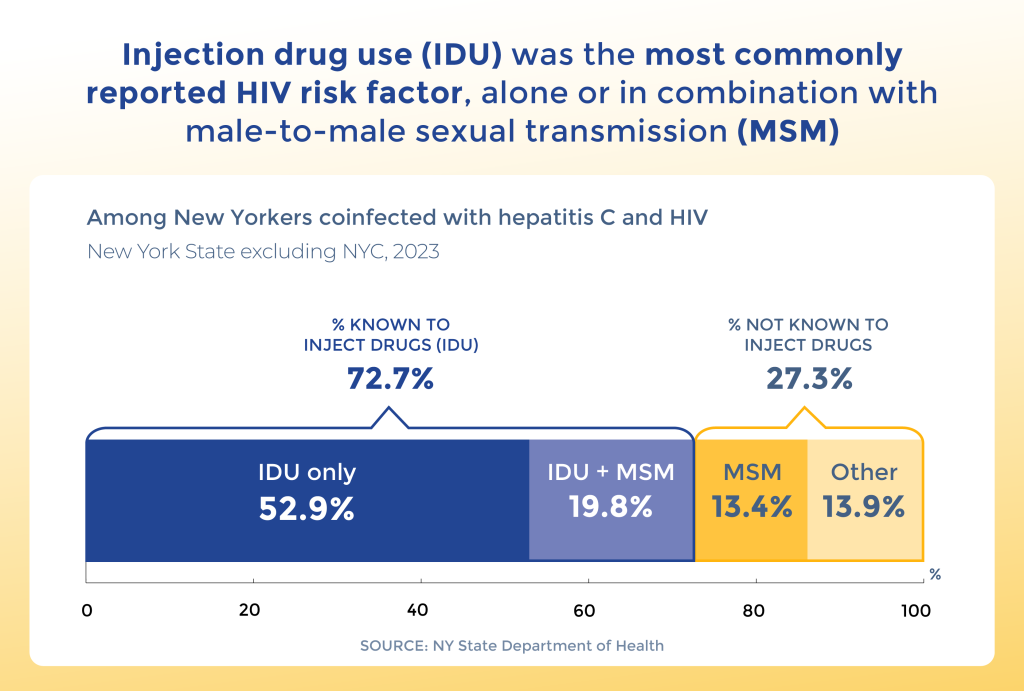
Risk factors: As blood-borne infections, hepatitis C and HIV share some common risk factors. Among the coinfected, injection drug use (IDU) was the most commonly reported HIV risk factor (72.7%), either alone (52.9%) or in combination with male-male sexual transmission (MSM) (19.8%). MSM by itself accounted for 13.4% of HIV transmission risk factors among the coinfected.
Timing of diagnoses: Over 85% of coinfected patients were diagnosed with HIV before being diagnosed with hepatitis C. This highlights the importance of hepatitis C prevention messaging among people living with HIV.
Understanding which populations are most impacted by hepatitis C/HIV coinfection in New York State (outside of New York City) can help guide education, prevention, testing, and treatment efforts in these populations. In turn, these efforts will lead New York closer to its hepatitis C elimination and HIV Ending the Epidemic goals.
[i] https://www.cdc.gov/nchhstp/about/syndemic.html
[ii] These data were presented during the World AIDS Day and Ending the Epidemic Summit, in a workshop entitled, “Eliminating Hepatitis C One Population and a Time – Starting with People Living with HIV” on December 10, 2025.
