
People who use drugs (PWUD) are at the highest risk for acquiring hepatitis C. The New York State (NYS) Hepatitis C Elimination plan has identified PWUD as the priority population for elimination. New treatments available to cure hepatitis C should be made accessible to PWUD. Guidelines support treating PWUD, even those actively using.
As shown by data from the three low-threshold models of hepatitis C treatment among PWUD funded by the AIDS Institute’s Office of Hepatitis Health Care and Epidemiology (OHHCE), high cure rates among PWUD are possible, especially when paired with supportive services including harm reduction and medication for opioid use disorder.
Rural communities in the United States have been disproportionately affected by the opioid epidemic, facing higher rates of opioid-related deaths and unique systemic challenges in addressing the crisis. As the opioid crisis surged, the number of new hepatitis C cases increased. From 2004-2014, among people ages 18-29, drug treatment program admissions for injection opioid use increased by 622%. HCV incidence increased by 400% in the same cohort.1 Between 2000-2019, HCV rates increased 10-fold among pregnant women with parallel increases in substance use and opioid use disorders.2
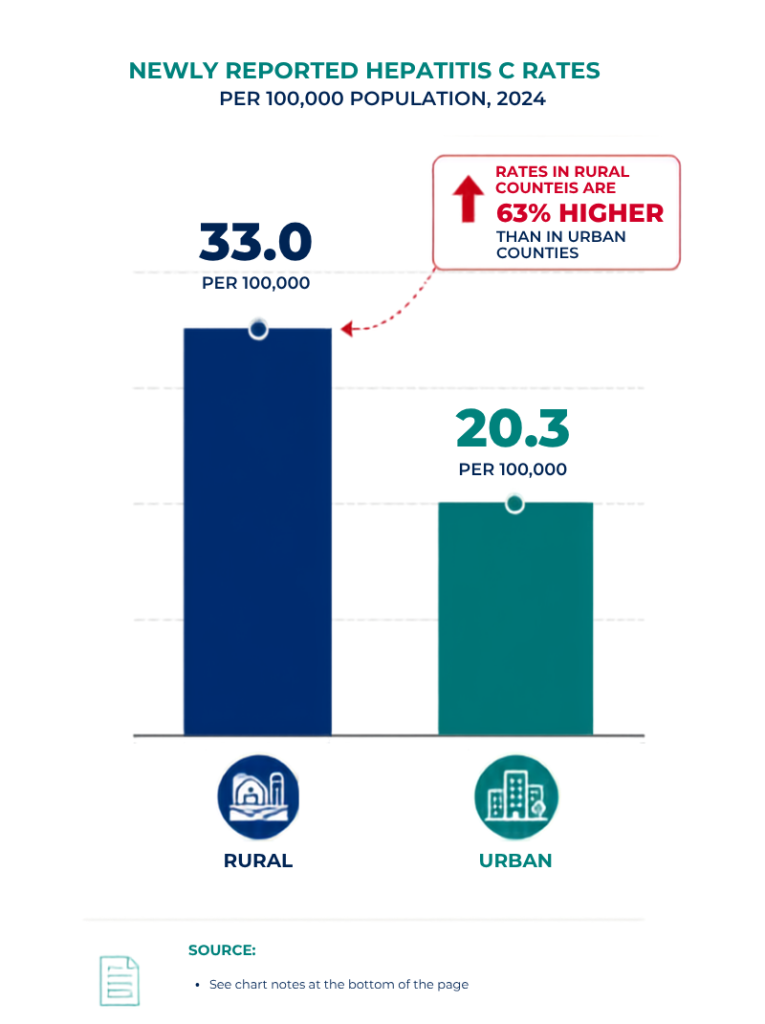
In NYS, outside of New York City, rates of hepatitis C are greater in rural areas than urban ones. According to 2024 NYS hepatitis C case report data, the rate of newly reported hepatitis C cases was higher in rural counties than urban counties outside of NYC (33.0 per 100,000 vs. 20.3 per 100,000 population). The highest rate was reported in the NY Penn/Binghamton area (33.7 per 100,000).3
Hepatitis C is curable even among PWUD. With high rates of hepatitis C in rural areas, getting treatment to those who need it is a priority. Despite urgent need for treatment capacity in rural areas, significant gaps remain in access to care. Data suggest that rural residents experience lower rates of hepatitis C treatment than urban residents. 4 Gaps in rural hepatitis C care access are driven by multiple factors, including system level barriers such as fewer hepatitis C treating clinicians in rural areas and limited transportation for provider visits. Additionally, provider and patient level barriers include stigma and misinformation about treatment eligibility. 5
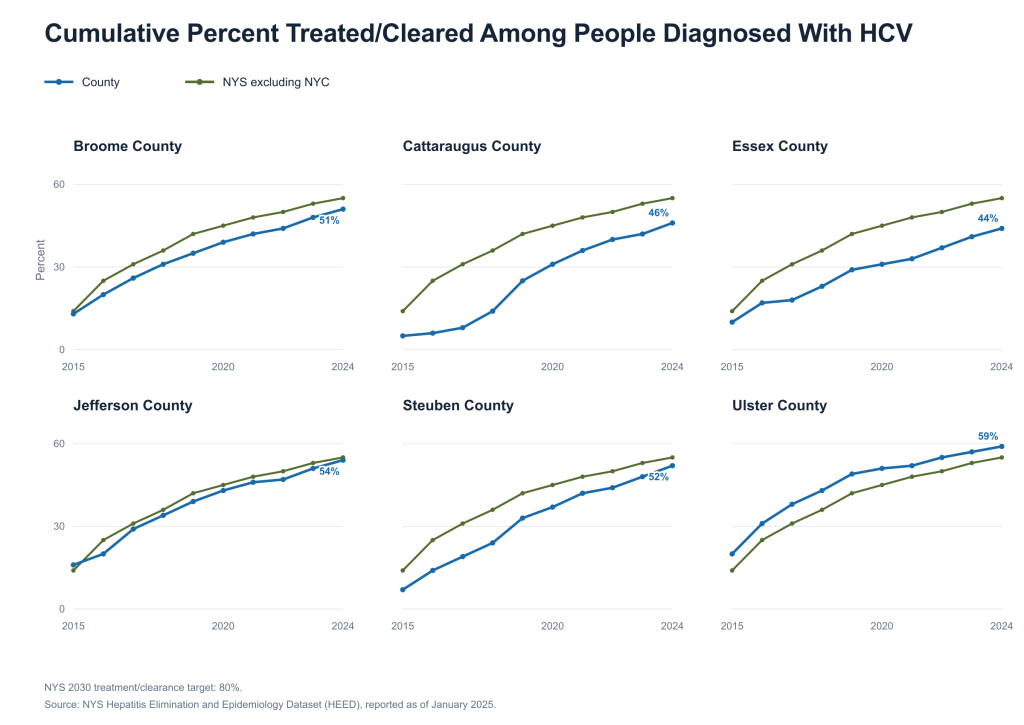
Regional focus groups and survey findings
In the fall of 2025, the OHHCE, in collaboration with the Department’s Office of Rural Health and the NYS Rural Health Networks, conducted a series of regional in-person focus groups to learn from providers and community members about existing knowledge, assets, and challenges related to hepatitis C testing, treatment, and cure in rural communities. In addition to the focus groups, OHHCE also surveyed all rural health community health centers (CHC) and Federally Quality Health Centers (FQHC) to understand the availability of hepatitis C services and challenges in providing services, and to identify any technical assistance (TA) needs.
A total of seven focus groups were held, with six in person (Olean, Hornell, Binghamton, Ellenville, Watertown, and Westport) and one virtual. Over 70 people from community-based organizations, harm reduction programs, local health departments, substance use disorder treatment programs, hospitals and community health centers attended. Common themes included lack of hepatitis C awareness and knowledge, limited to no HCV testing, and lack of provider capacity, making accessibility to curable medications limited. Many participants mentioned limited to no harm reduction services and experiencing stigma/misinformation/fear. Many social care needs were also identified, with the most common being transportation and housing. Limited internet and phone coverage issues were also discussed, as they often rely on internet or telehealth suites in libraries.
15 of the 24 rural CHC/FQHCs responded (62.5% response rate) to the incentivized hepatitis C infrastructure survey. The majority (80%) of respondents have implemented the NYS Hepatitis C testing law; however, few (20%) use the opt-out method to offer testing. Over half (57%) of the health center respondents indicated they have providers onsite treating hepatitis C. None indicated using telehealth for treatment. The most common reported social care need was transportation (88%), financial (68%), followed by housing and food/nutrition (40% each). The most common TA needs were developing opt-out testing policies and messaging, electronic health record tools and prompts, information on hepatitis C testing law, building capacity for providers to treat hepatitis C and increasing non-clinical capacity such as care coordinators, community health workers.
Upcoming webinars
To increase provider capacity for and accessibility to hepatitis C treatment in rural areas of NY, the OHHCE is supporting Albany Medical College to design and implement a telehealth and telementoring program. OHHCE will also host a webinar series beginning in September. Topics covered include strategies for implementing universal hepatitis C testing, tools for implementing opt-out hepatitis C testing and steps to building capacity for onsite hepatitis C treatment. Register here for the webinars. For more information on the tele-health/telementoring program email: hepatabc@health.ny.gov
Notes:
- Centers for Disease Control and Prevention. https://www.cdc.gov/nchhstp/newsroom/2017/hepatitis-c-and-opioid-injection-press-release.html
- Arditi B, Emont J, Friedman A, et al. Deliveries among patients with maternal hepatitis C virus infection in the United States, 2000-2019 Obstetrics & Gynecology (2023):141-828-36.
- New York State Department of Health. Hepatitis B and C Epi and Surveillance Report. 2024.
- Du P, Wang X, Kong L, Riley T, Jung J. Changing Urban-Rural Disparities in the Utilization of Direct-Acting Antiviral Agents for Hepatitis C in U.S. Medicare Patients, 2014-2017. American Journal of Preventive Medicine 60, no. 2 (2021): 285–293.
- Walters S. M, Frank D, Felsher M. et al., “How the Rural Risk Environment Underpins Hepatitis C Risk: Qualitative Findings from Rural Southern Illinois, United States,” International Journal of Drug Policy 112 (2023): 103930.
